


WHO IS CONRAD?
Rev. Conrad B. Tillard Sr. is an American minister, educator, activist, political commentator, media host, and former candidate for public office whose career has crossed more than four decades of Black American religious, political, and cultural life.
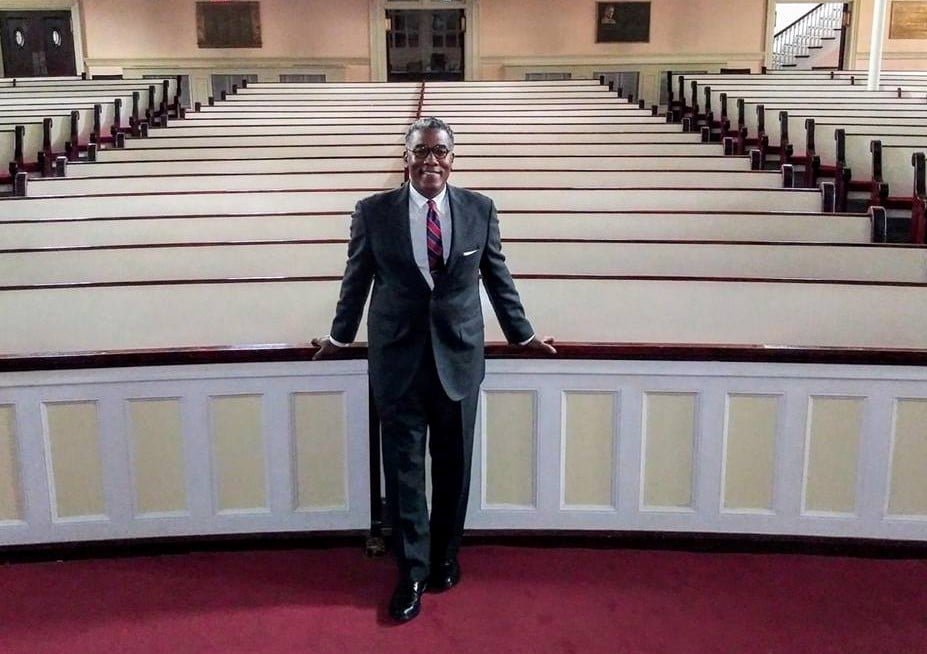
From the student activism inspired by Rev. Jesse Jackson’s 1984 presidential campaign, through his years in the Nation of Islam and his emergence as the nationally recognized “Hip-Hop Minister,” to his return to Christianity and leadership in the Black church, Tillard’s life has been defined by spiritual searching, intellectual growth, and service to the community.
Today, Rev. Tillard serves as Senior Pastor of The Congregational Church of South Hempstead on Long Island. He is also the host of Conversations with Conrad, a national podcast examining the social, theological, cultural, and political issues affecting African Americans.
His work emphasizes faith, family, education, Black institution-building, homeownership, entrepreneurship, public safety and economic opportunity. Drawing upon forty years of experience, he brings an independent perspective to the most important debates facing the Black community and the nation.
Conrad Tillard’s views have evolved, but his journey is not principally a movement from radicalism to conservatism. It is a movement from an initially external explanation of Black liberation toward a more integrated theory of Black agency—one that recognizes structural injustice but places greater emphasis on faith, family, character, education, ownership, entrepreneurship, and durable institutions as the indispensable foundations of freedom.
That is a much more intelligent explanation of his journey, rather than simply saying:
“The former Hip-Hop Minister became more conservative.”
It explains why.
And there is an even deeper continuity.
The young Conrad Tillard asked:
How can Black people gain power?
The middle-period Tillard asked:
How can Black culture be made socially constructive?
The pastor and educator asked:
What spiritual and moral resources sustain a people?
The contemporary Tillard increasingly asks:
What institutions, values, and economic arrangements allow Black families to flourish across generations?
Those aren’t four unrelated questions.
They are successive versions of the same question.