
Conrad Bennette Tillard Sr. is an American activist, minister, father, adjunct professor, and radio host.
A Life at the Intersection of Faith, Politics and Black America
Rev. Conrad B. Tillard Sr. is an American minister, educator, activist, political commentator, radio and podcast host, and former candidate for public office. His public career has crossed several of the most consequential movements in modern Black American life—from the presidential campaigns of Rev. Jesse Jackson, the Nation of Islam and the cultural politics of hip-hop to the Black church, higher education, community organizing and electoral politics.

His journey is not simply a record of the positions he has held. It is the story of an evolving spiritual and political consciousness shaped by more than forty years of experience in America’s public square.
Early Life and Education
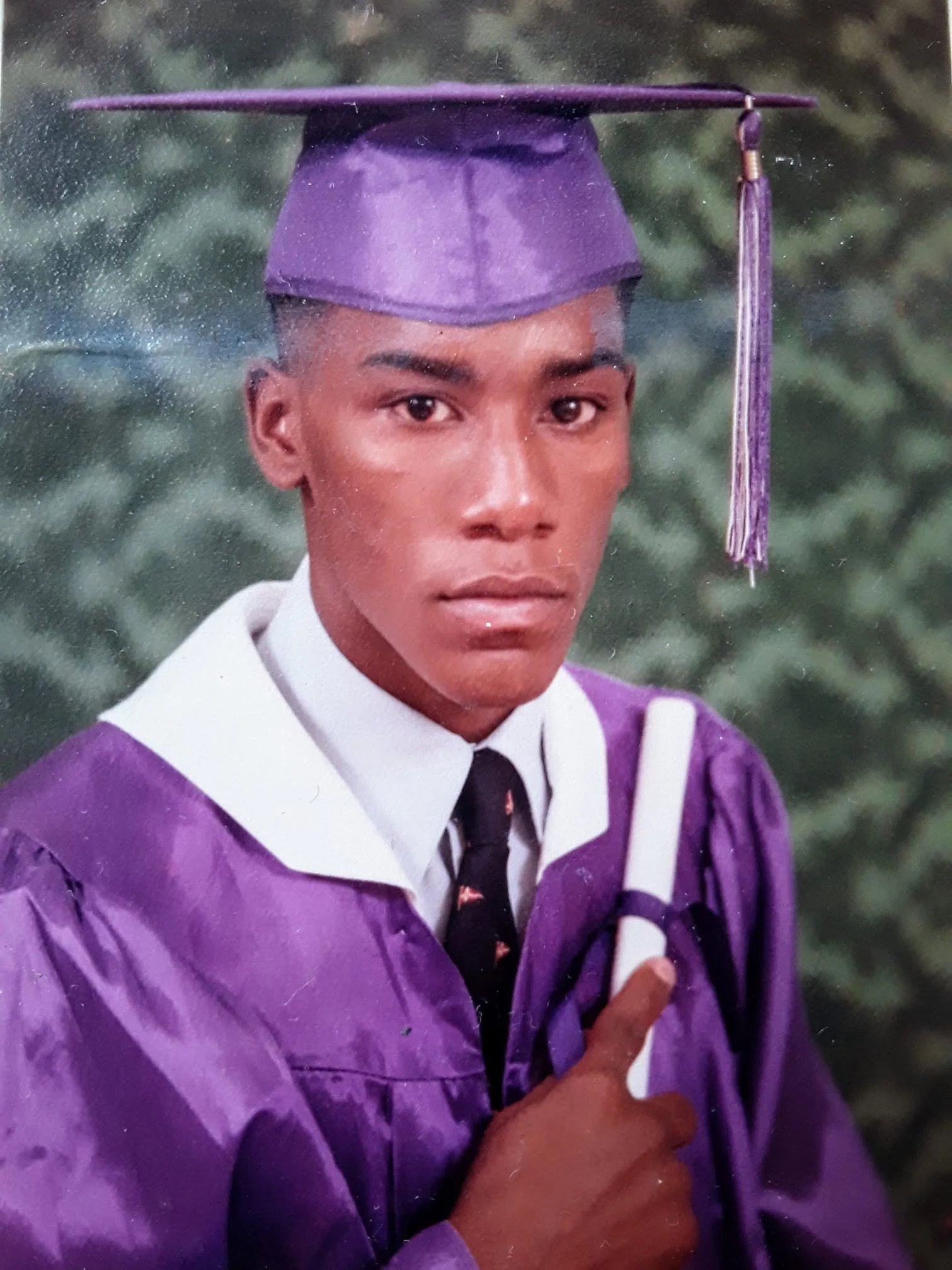
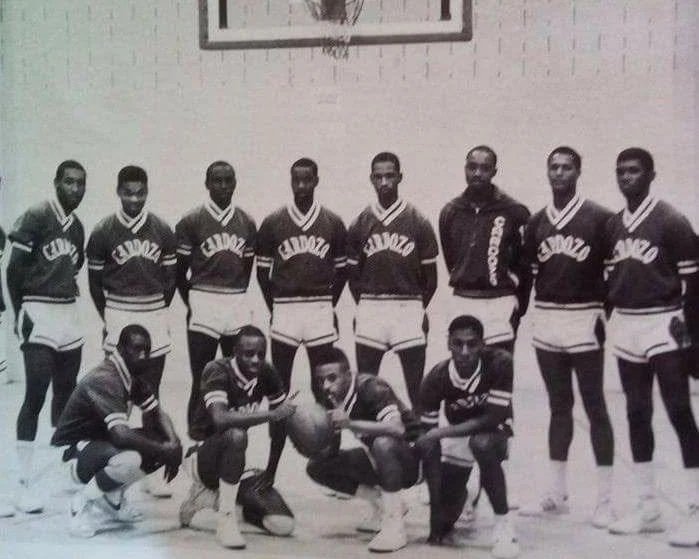
Conrad Bennette Tillard Sr. was born on September 15, 1964, in St. Louis, Missouri, and was raised primarily in Washington, D.C., and Atlanta, GA. He graduated from Francis L. Cardozo High School and earned a Bachelor of Arts (B.A.) in African American Studies from the University of Pennsylvania. He later attended Harvard Divinity School and the John F. Kennedy School of Government at Harvard University. He transferred to Union Theological Seminary (Columbia University-affiliated) to study with the Father of Black Theology, the late Dr. James H. Cone, and received his Master of Divinity Degree (M.Div.). He is also a graduate of Princeton Theological Seminary, where he received a Master of Theology Degree (Th.M.). He has completed his doctoral coursework ( D.Min.) at Duke Divinity School and is currently completing his doctoral thesis.

At Penn, Tillard served as president of the Black Students League and studied under distinguished scholars, including Evelyn Brooks Higginbotham. His undergraduate years coincided with renewed Black student activism, international anti-apartheid organizing, and national debate over the political direction of Black America. The two principal voices in Black America that would emerge during his formative intellectual years were Rev. Jesse Louis Jackson and Minister Louis Farrakhan. He would become a student of both men.
The Jesse Jackson Generation
Tillard’s political awakening was profoundly influenced by Rev. Jesse Jackson’s historic 1984 presidential campaign. Jackson’s effort introduced a generation of young Black Americans to national electoral politics and demonstrated that a broad, multiracial coalition could challenge the established boundaries of American political life.
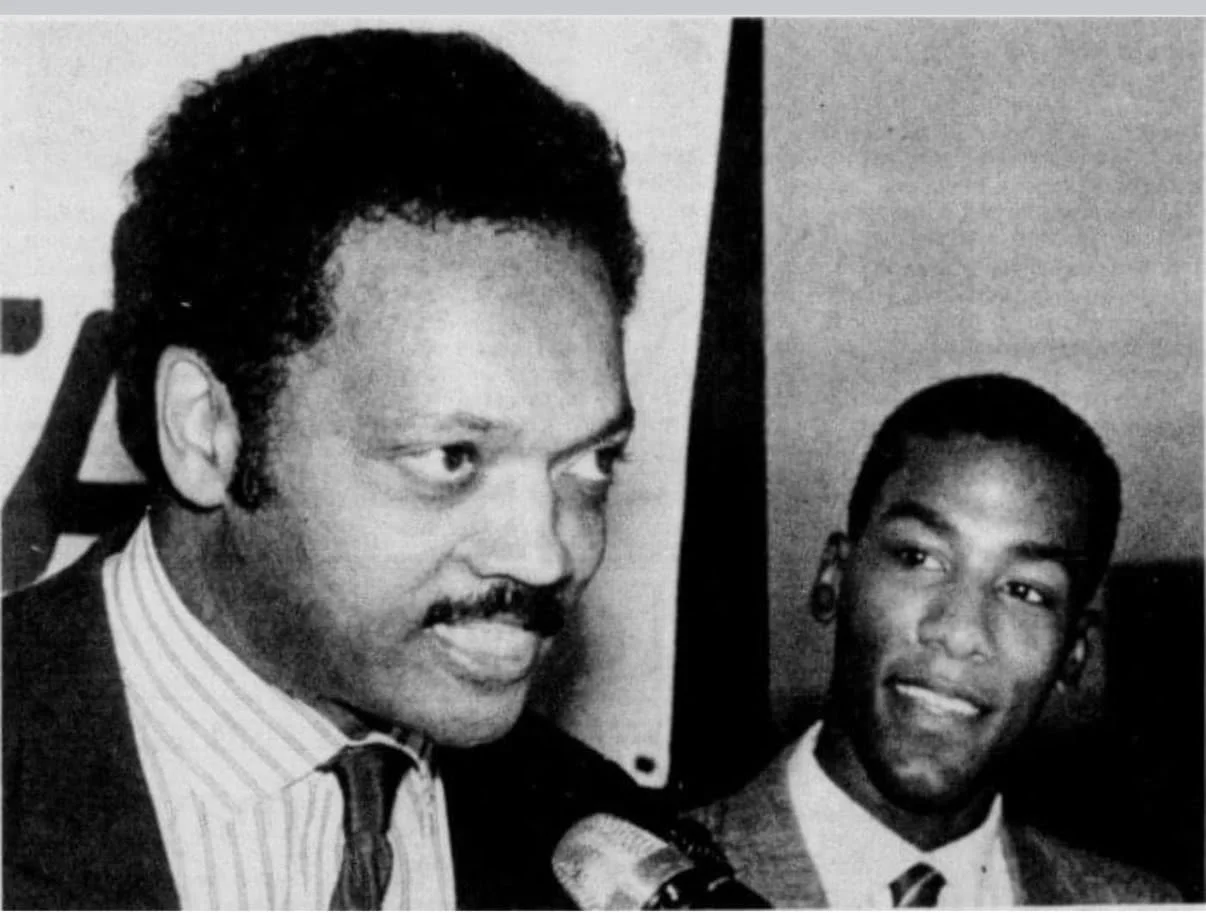
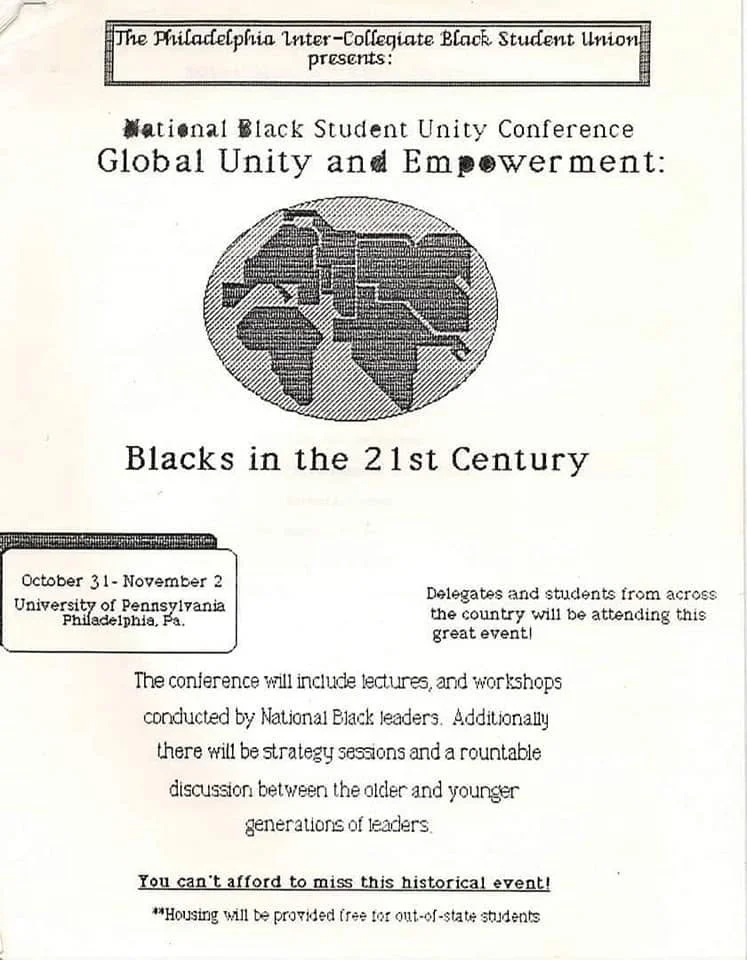
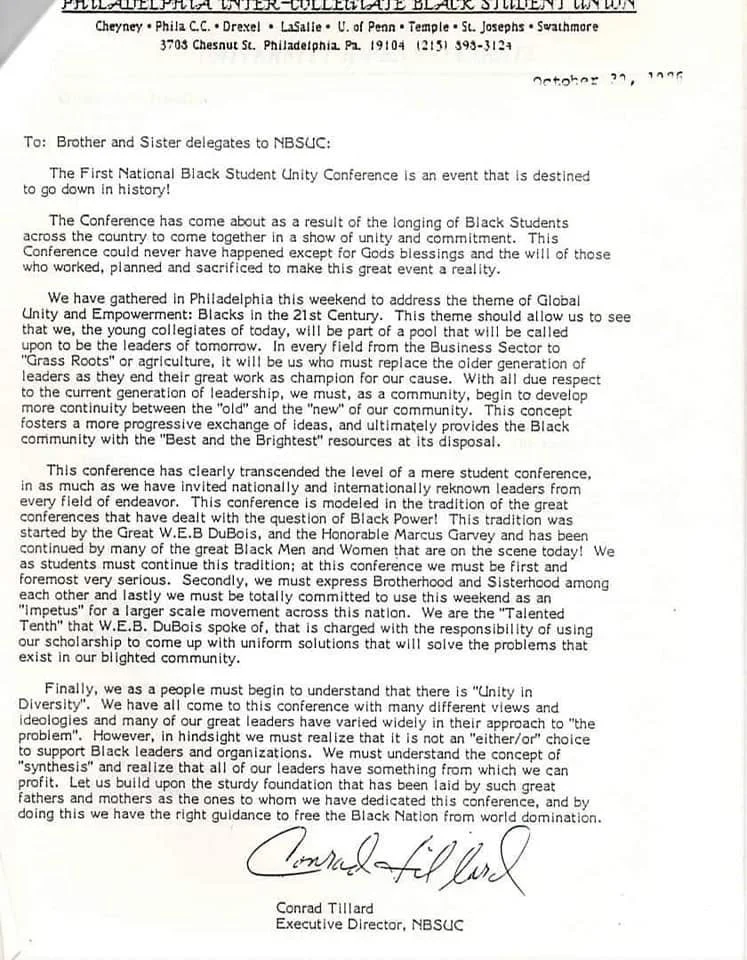
Between 1986 and 1988, Tillard helped organize the national Student Unity Conference and Congress, bringing together students and nationally prominent leaders, including Rev. Jesse Jackson, Kwame Touré and Robert L. Woodson.
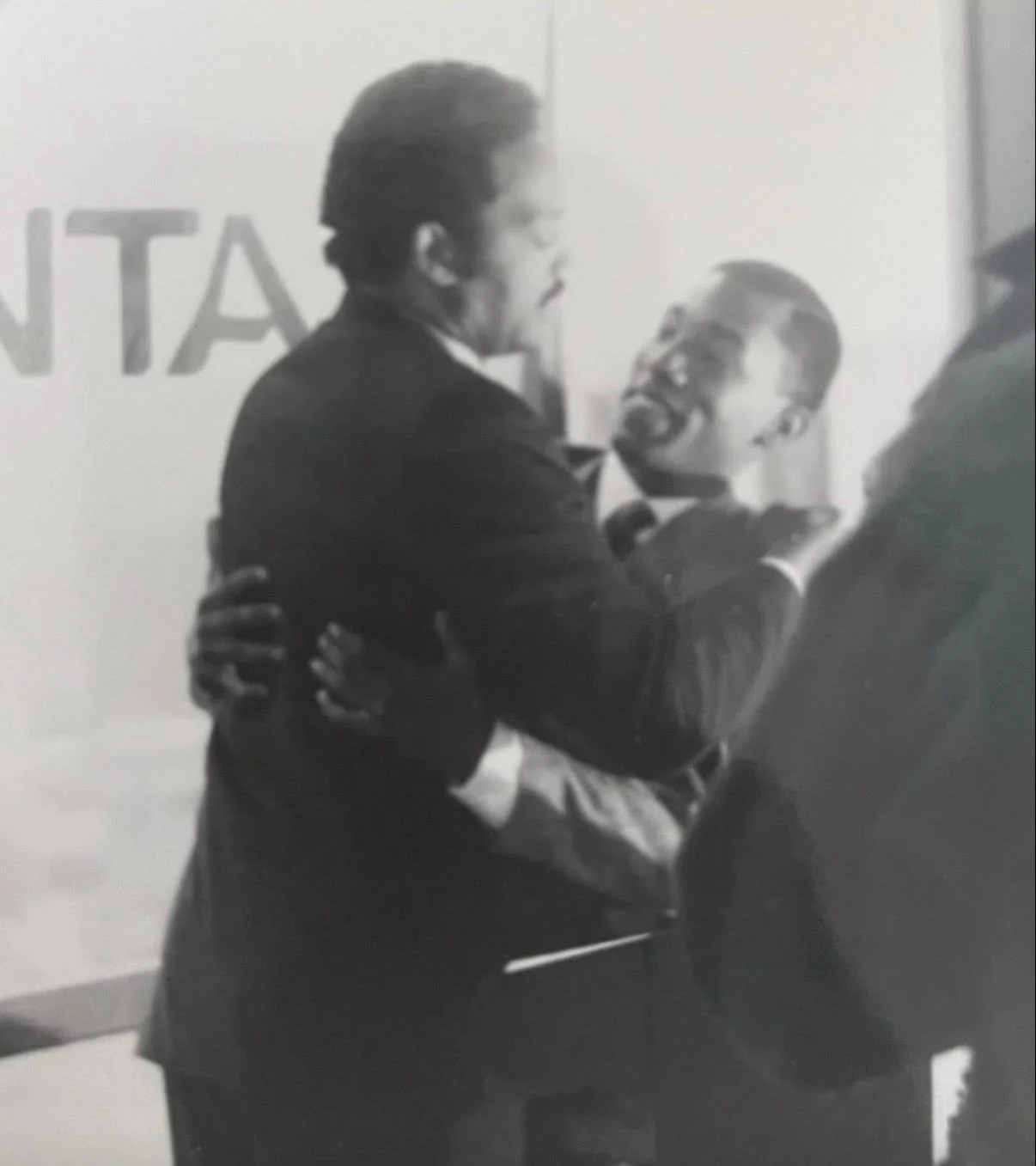
The experience established Tillard as a national student leader and set a pattern that would define his career: connecting and synthesizing seemingly disparate intellectual ideas from various traditions within the Black canon, standing firm in his religious convictions, engaging in and organizing political action, and building community energy.
The Nation of Islam and Mosque No. 7
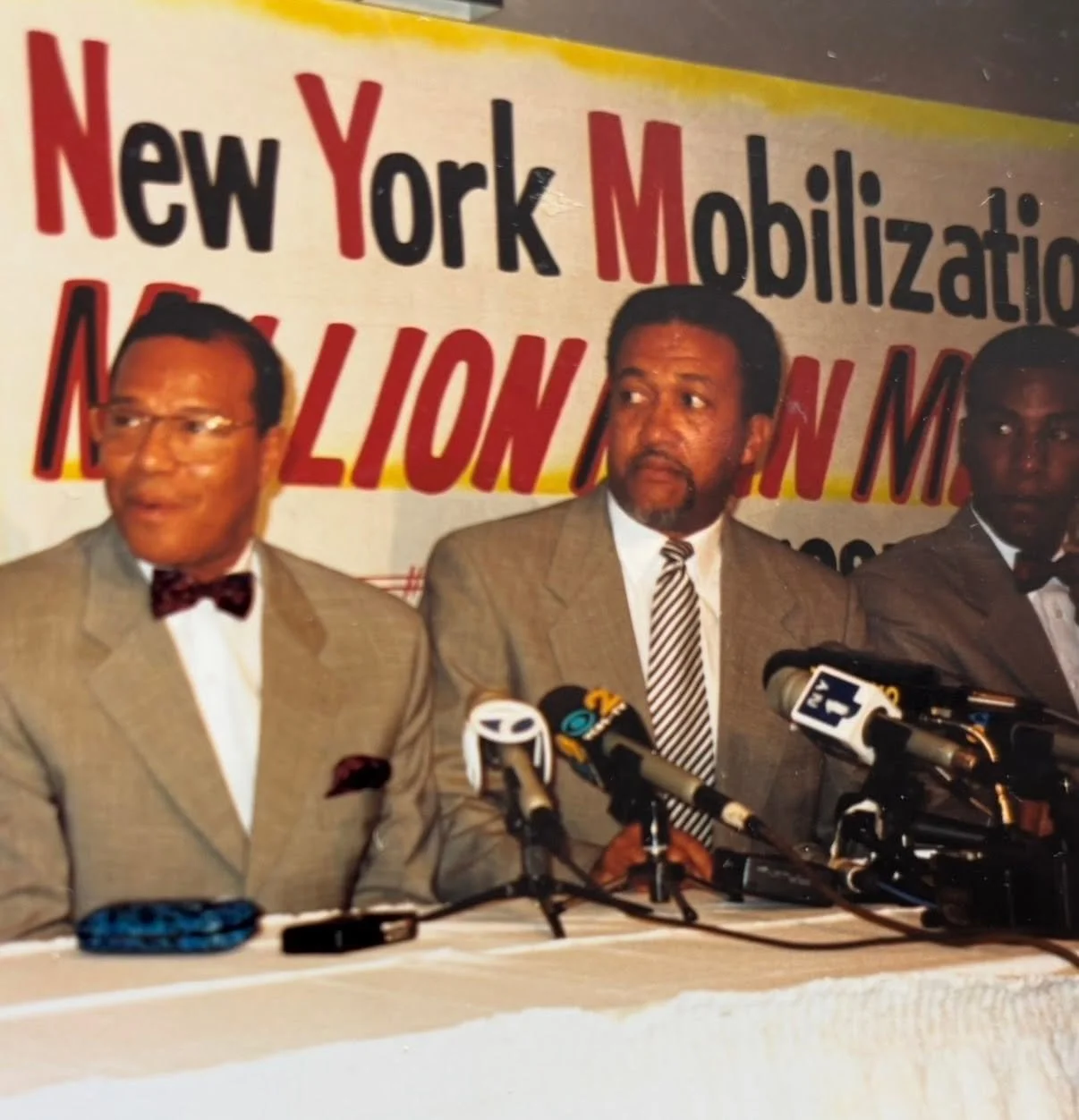
Tillard’s spiritual and political journey subsequently took a dramatic turn when he joined the Nation of Islam. He became a pupil of Minister Louis Farrakhan, who gave him the name Conrad Muhammad.
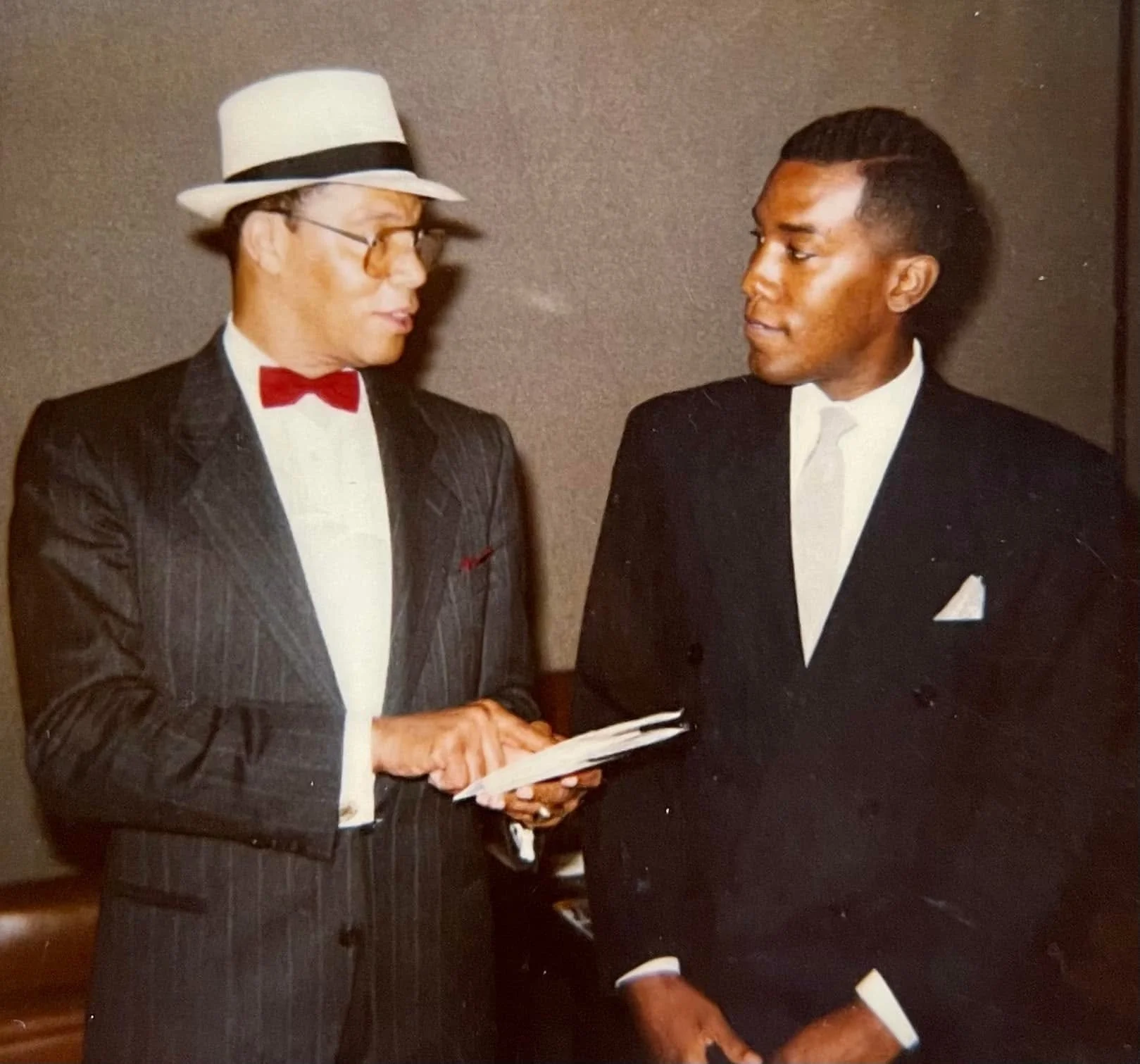
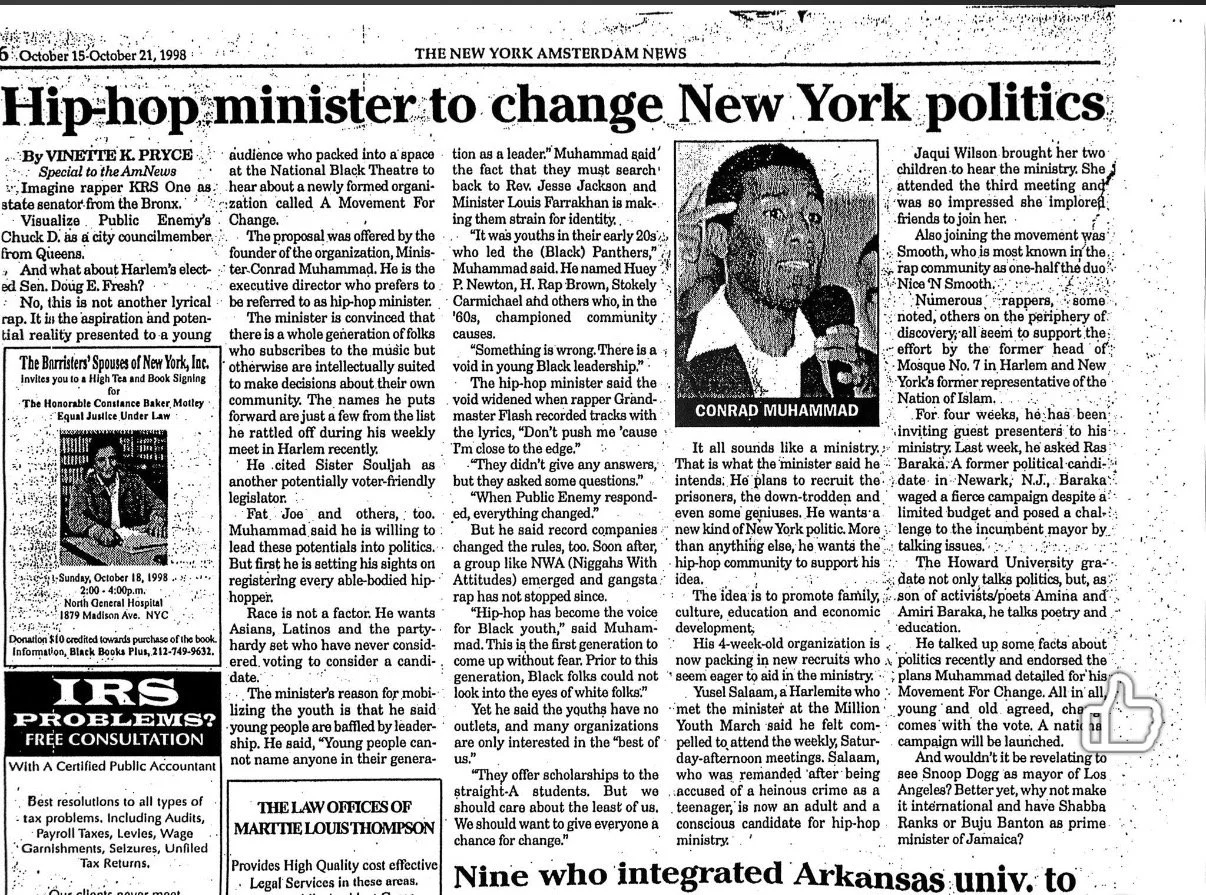
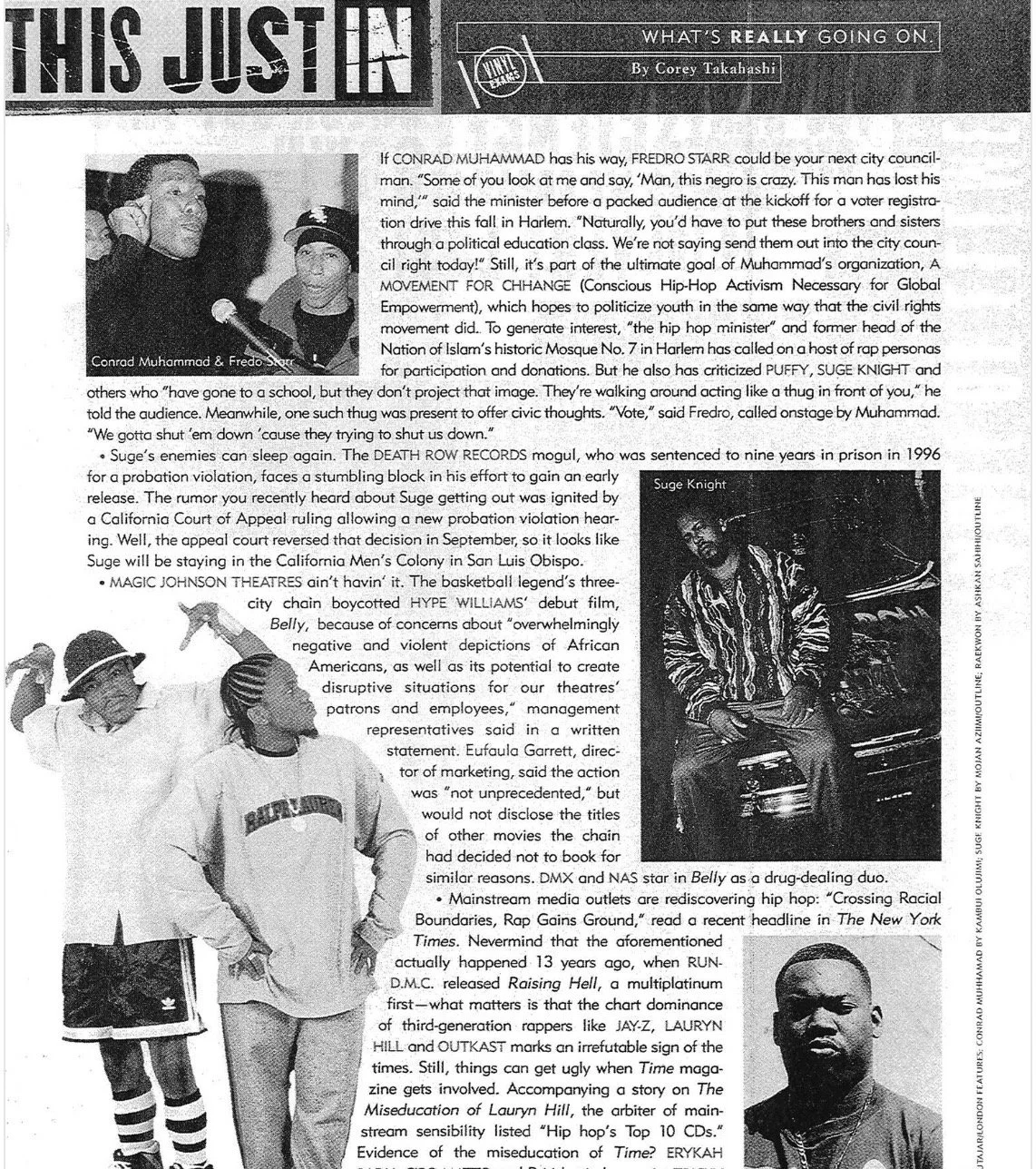
By his mid-twenties, he had been appointed minister of historic Mosque No. 7 in Harlem—the influential mosque once led by Malcolm X. In that position, he emerged as one of the Nation of Islam’s most visible young ministers and developed a national reputation as the “Hip-Hop Minister.”

The title reflected Tillard’s unusual relationship with the emerging hip-hop generation. He engaged recording artists, cultural leaders and young people while also challenging gangsta rap, misogyny, violence and commercial images that he believed degraded Black life.
Tillard advocated what he called “conscious hip-hop activism”: using the cultural reach of hip-hop to promote political education, voter participation, responsibility and community development.

After leaving Mosque No. 7, he established A Movement for C.H.H.A.N.G.E. Through the organization, Tillard and his colleagues conducted youth outreach, political education, and voter-registration efforts across the country. His declaration that “hands that once scratched turntables will one day pick a president” anticipated the political influence that the hip-hop generation would later exercise in American elections.
Returning to Christianity
The most consequential transformation in Tillard’s life was his departure from the Nation of Islam and return to the Christian faith of his youth.
His theological studies at Harvard Divinity School led to a powerful conversion experience and sustained engagement with Christian theology, biblical scholarship, Christian ethics, and the Black church tradition. He would return to New York City and join the historic Abyssinian Baptist Church in Harlem, where he was licensed and ordained under the leadership of the late Rev. Dr. Calvin O. Butts III.

His return to Christianity was more than a change in religious affiliation. It represented a deeper theological reconsideration of faith, redemption, leadership, human fallibility, and the meaning of service.
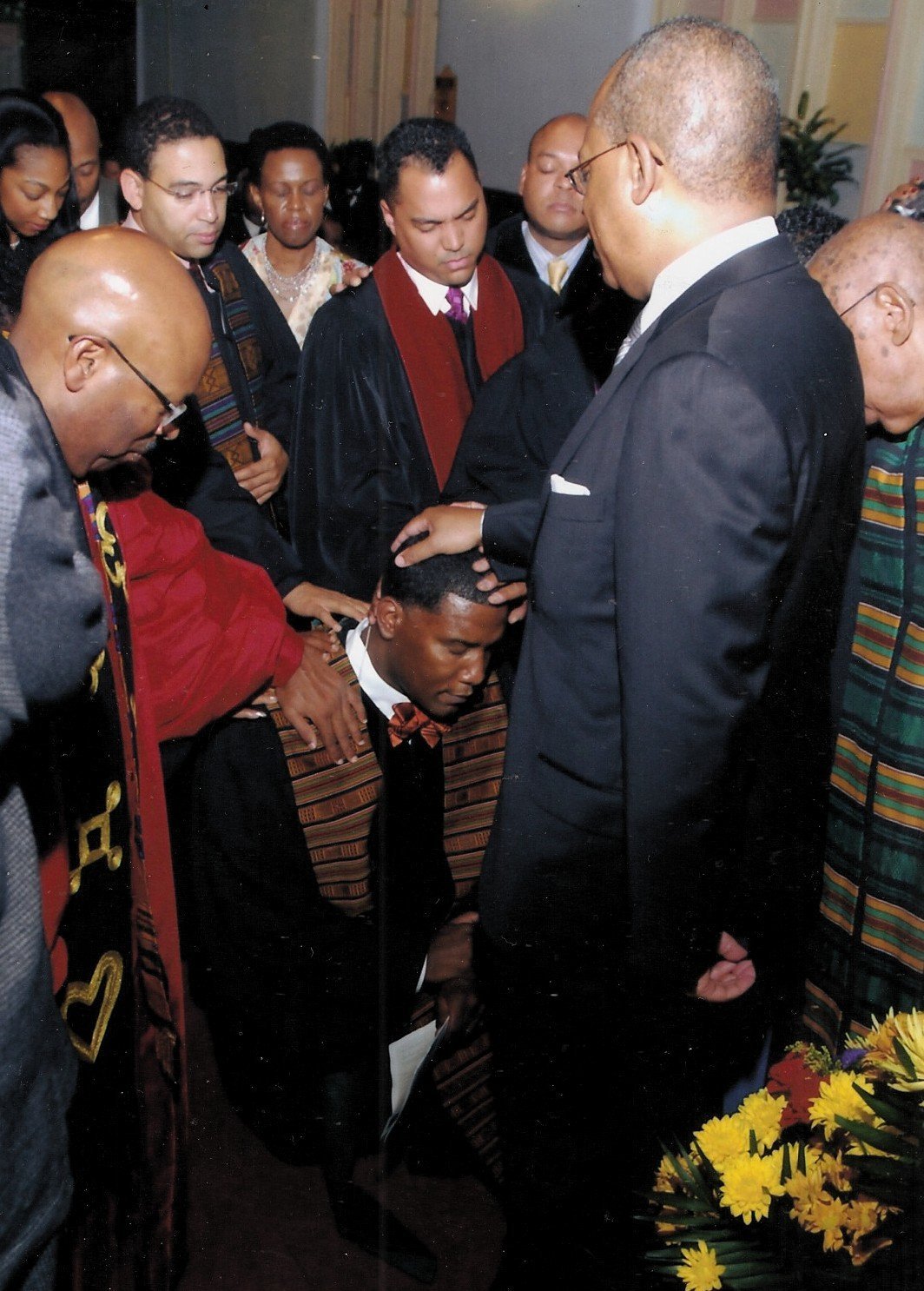
Rev. Tillard went on to serve as interim minister of Eliot Congregational Church in Roxbury, Massachusetts; Senior Minister of Nazarene Congregational Church in Bedford-Stuyvesant, Brooklyn; and Senior Minister of Flatbush-Tompkins Congregational Church in Brooklyn from 2018 through 2022.

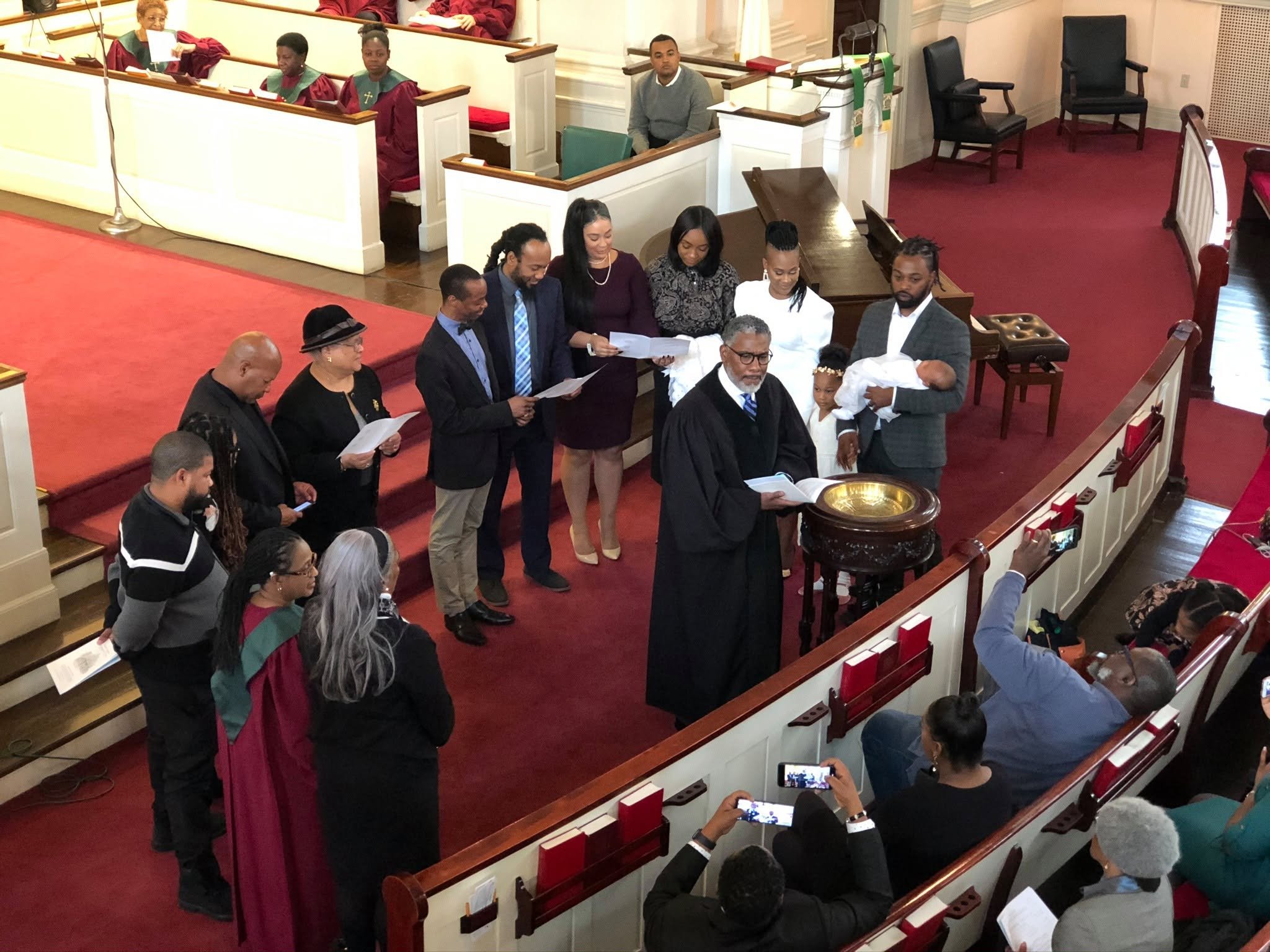
At Flatbush-Tompkins, he helped guide the congregation through the unprecedented challenges of the COVID-19 pandemic, attending to the spiritual and practical needs of members during a period of isolation, loss, and social upheaval.
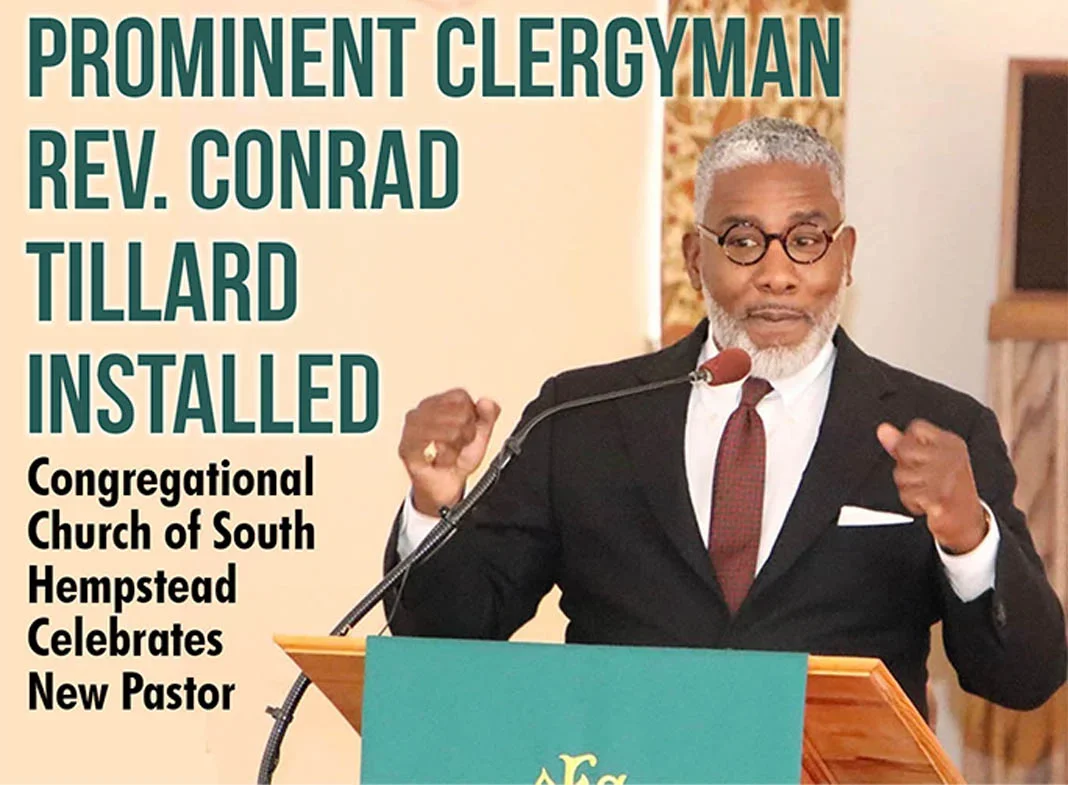
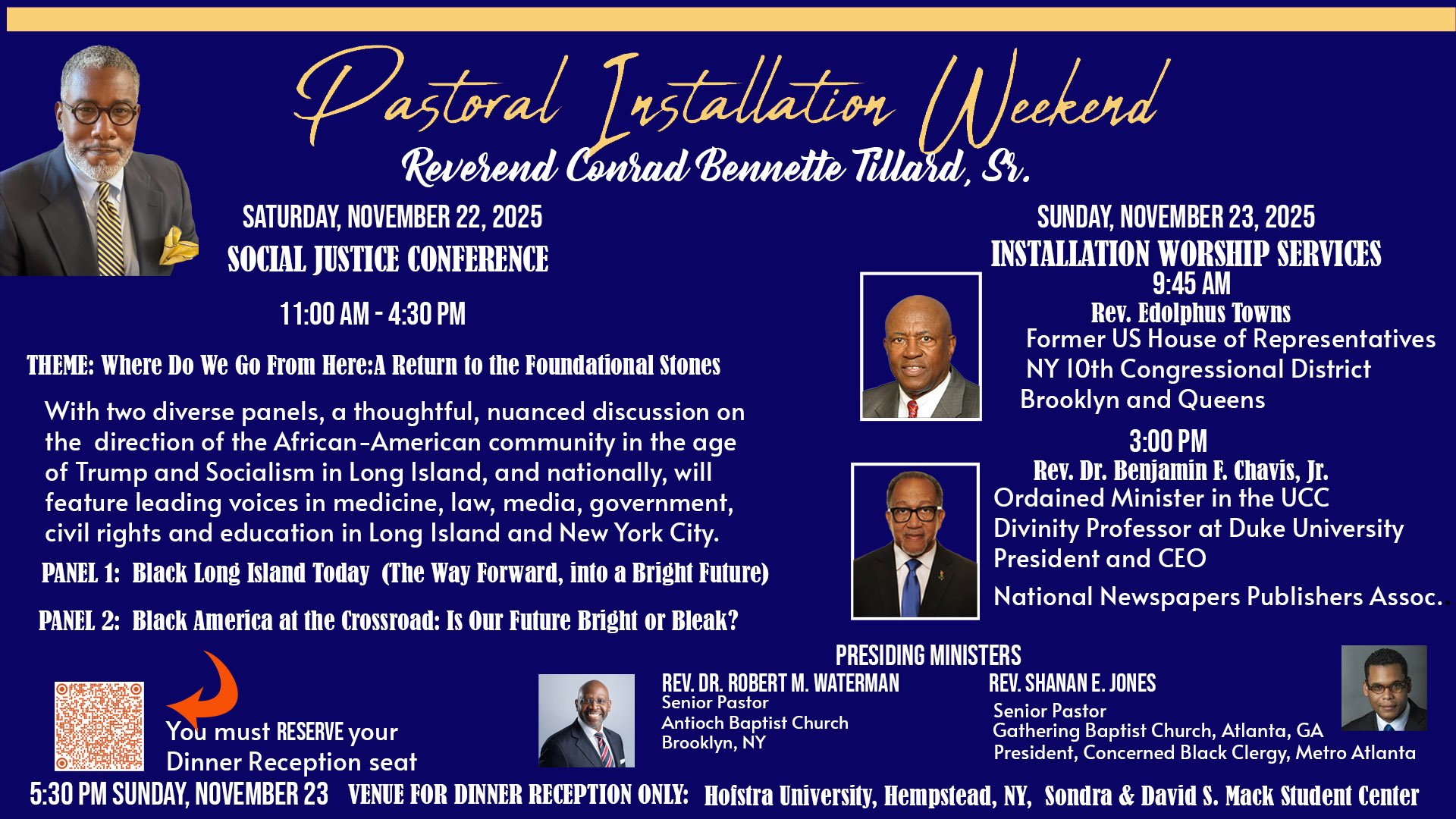
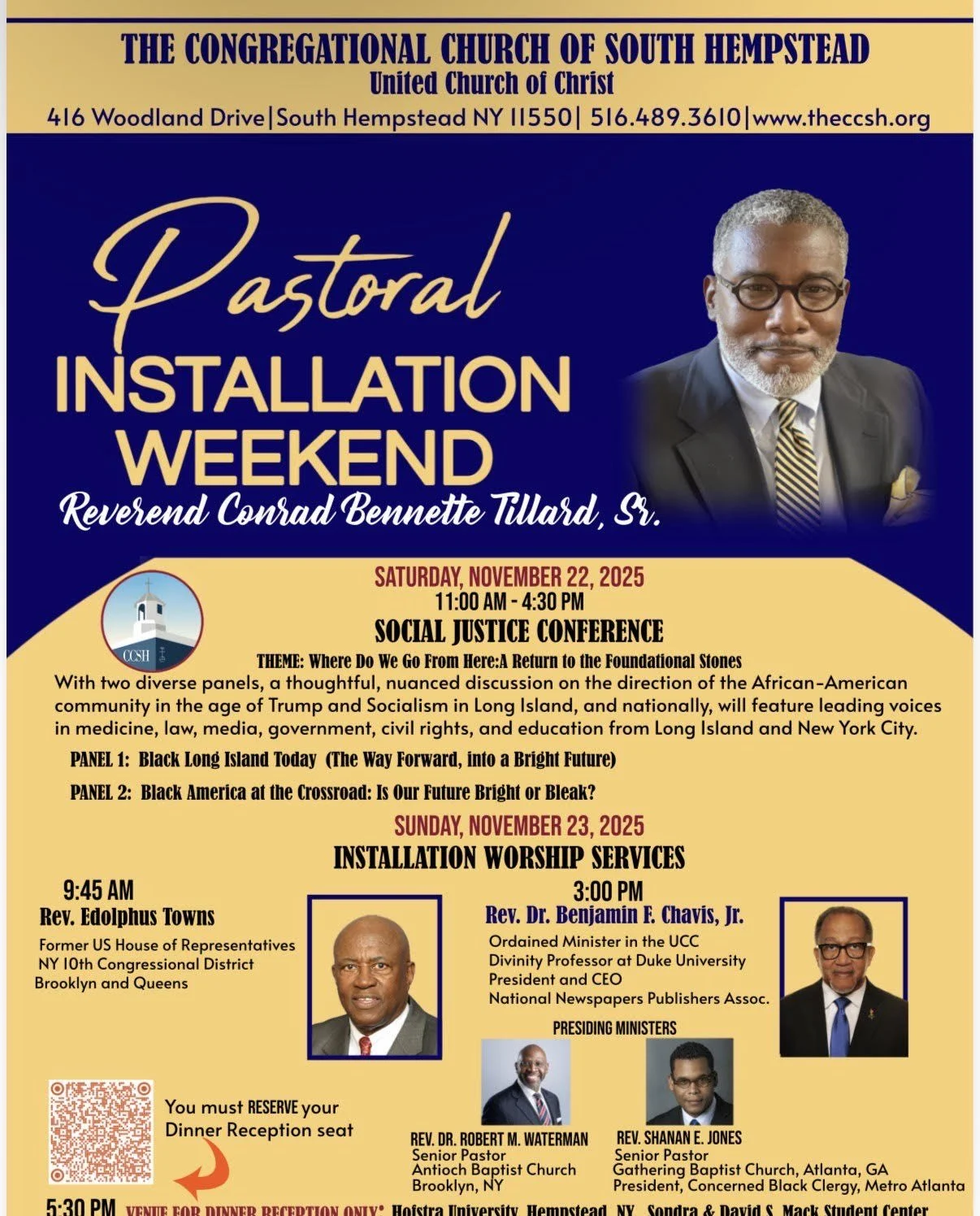
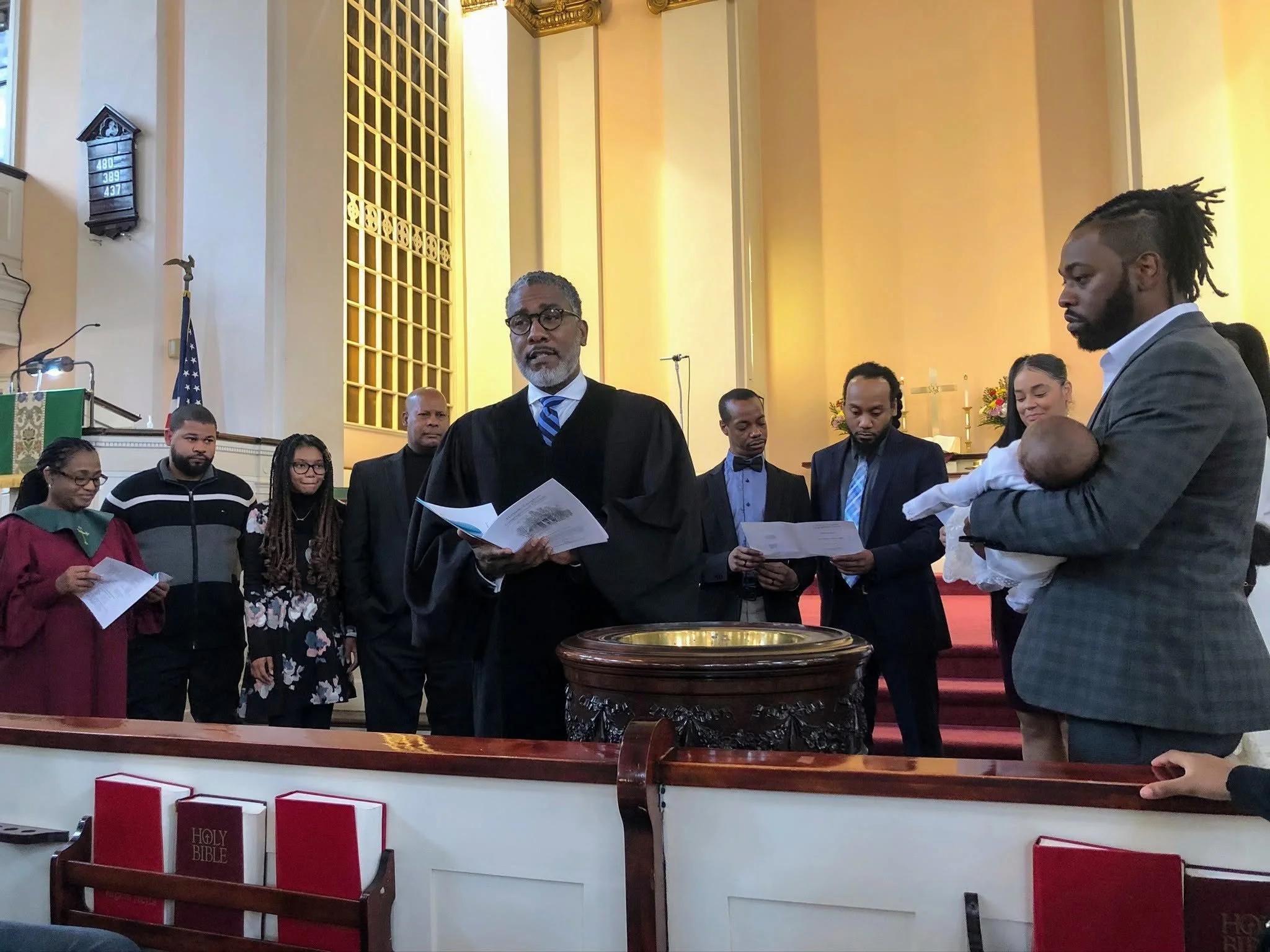
Today, Rev. Tillard serves as Senior Pastor of The Congregational Church of South Hempstead, a United Church of Christ congregation on Long Island.
Ministry in the Community
Throughout his pastoral career, Rev. Tillard has understood ministry as a calling that extends beyond the walls of the church.

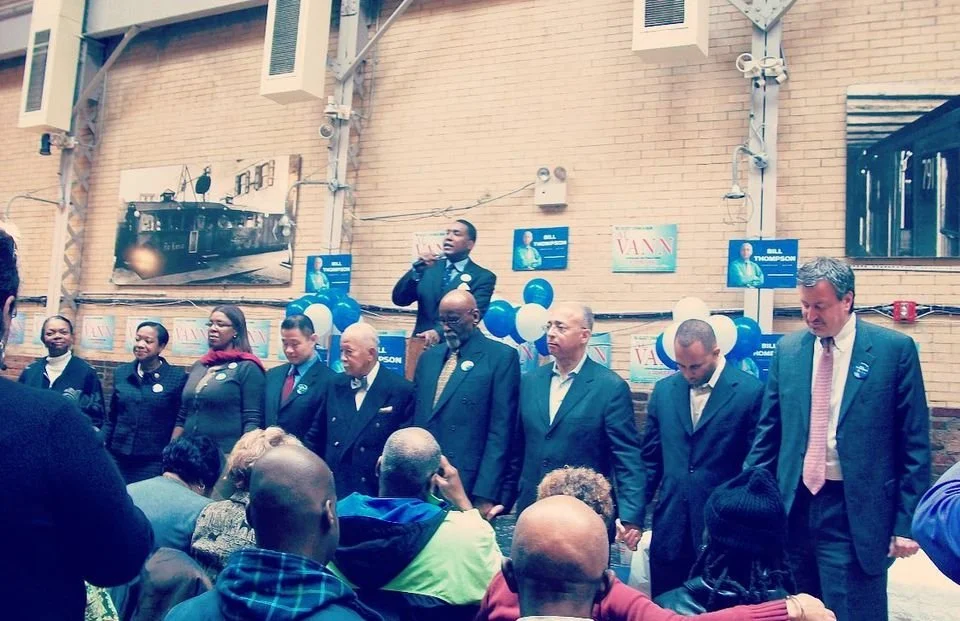
At Nazarene Congregational Church, he brought prominent religious, political, and intellectual leaders into conversation with the congregation, including Professor Charles Ogletree, Dick Gregory, and NAACP President Benjamin Jealous. He also served on the community advisory board of the historic Boys and Girls High School following his appointment by New York City Councilmember Albert Vann.
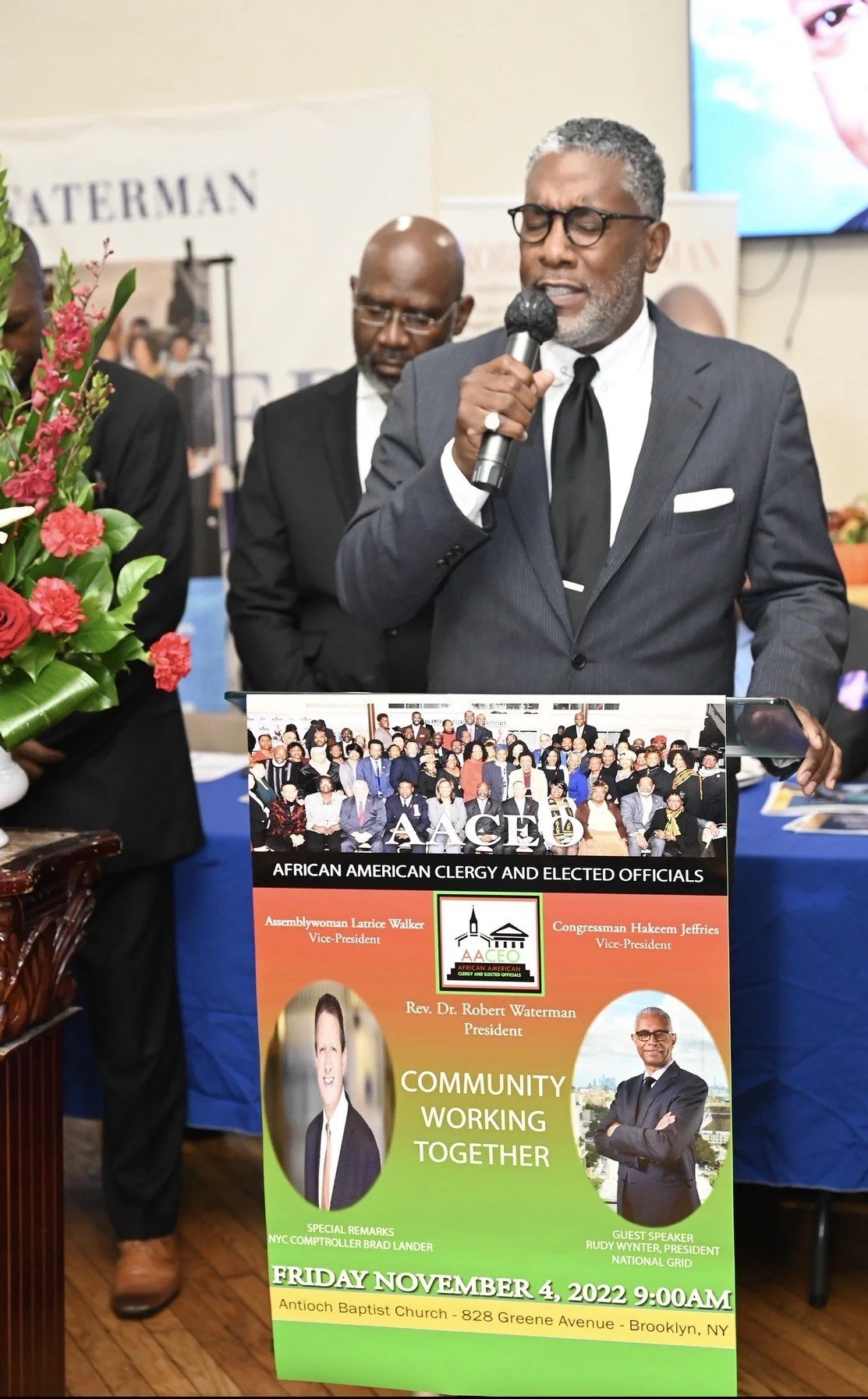
His ministry continues to emphasize the relationship between personal faith and community responsibility. His principal concerns include strengthening families, educating children, protecting Black homeownership, expanding entrepreneurship, supporting family-sustaining employment, maintaining safe neighborhoods, and rebuilding the institutions upon which healthy communities depend.
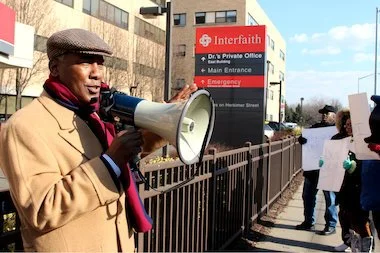
Educator and Public Intellectual
Rev. Tillard has taught in the Black Studies Department at the City College of New York. His courses have addressed the Civil Rights Movement, the Black Power Movement, Malcolm X, Harlem, and the social and political influence of hip-hop.
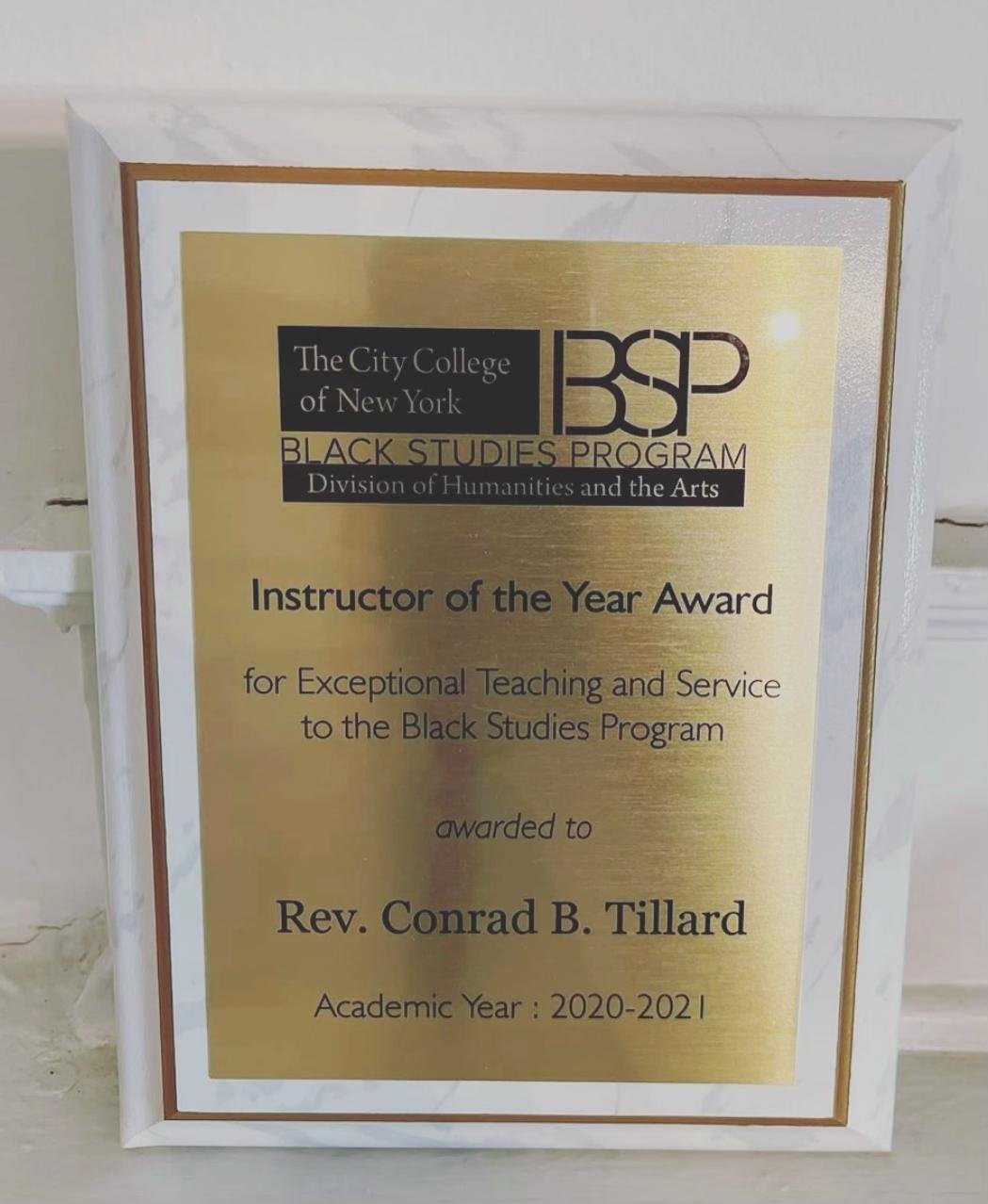
During the 2020–2021 academic year, he was recognized as Professor/Instructor of the Year for his teaching and service to the Black Studies program.


His experience as both an activist and educator gives him a distinctive approach to history. He does not teach Black political and cultural movements solely as an outside observer. He encountered many of those movements personally, worked alongside some of their participants, and experienced their accomplishments, contradictions, and failures.
An Independent Political Voice
Rev. Tillard’s political identity does not fit neatly within the conventional categories of left and right.
The Civil Rights Movement, Black nationalism, Black religious traditions, Democratic and Republican politics, community organizing, and the Black intellectual tradition have all shaped his theology and politics. He is neither a traditional Liberal nor Conservative; he is a common-sense thinker, independent in thought, action, and voting.
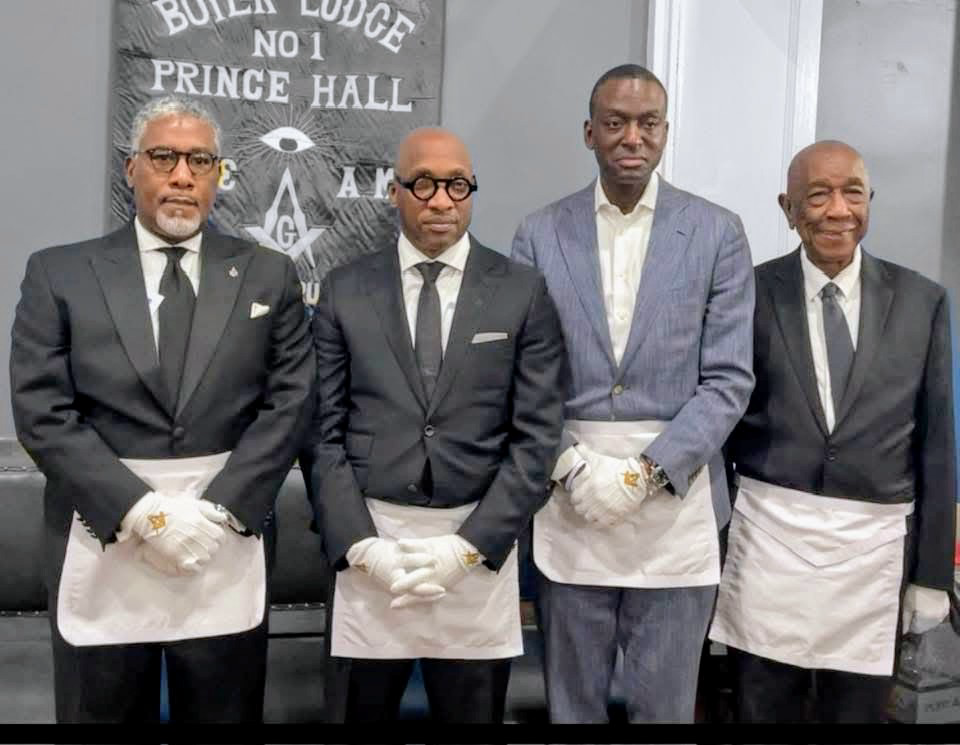
His worldview calls for renewed emphasis on faith, family formation, educational achievement, positive cultural values, homeownership, entrepreneurship, Black business development, and the free market. He has become an outspoken critic of socialism, the Democratic Socialists of America, and political programs that he believes threaten private property, discourage Black wealth creation, or substitute ideological slogans for the practical needs of working families.

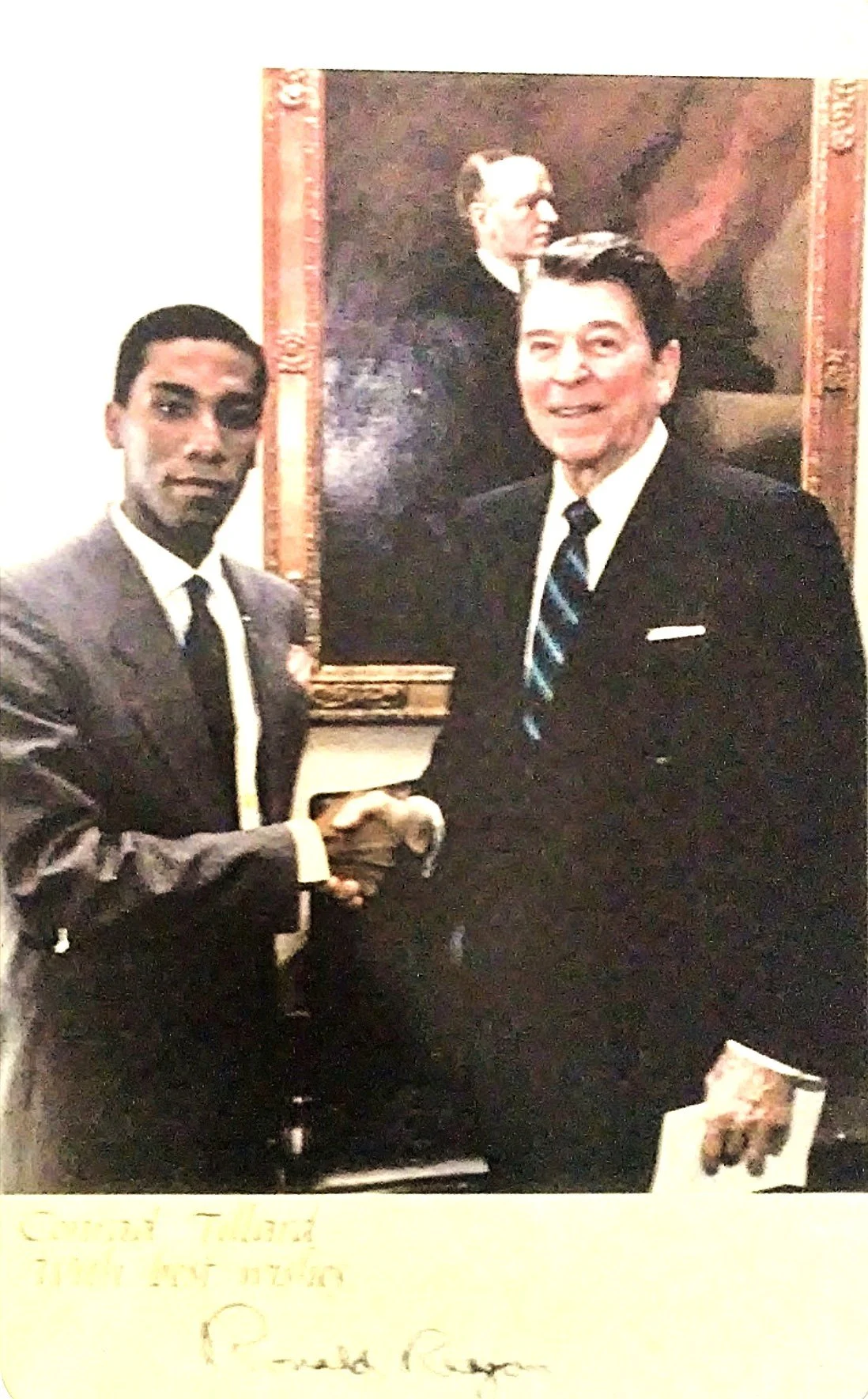
At the same time, he continues to advocate for civil rights, economic opportunity, equal treatment under the law, responsible government, and public policies that strengthen historically disadvantaged communities.
This combination has made Tillard an independent, sometimes contrarian voice in Black political life: committed to racial justice but unwilling to accept the entire agenda of the contemporary progressive left.
Electoral Politics
Rev. Tillard has twice sought elected office in New York City.
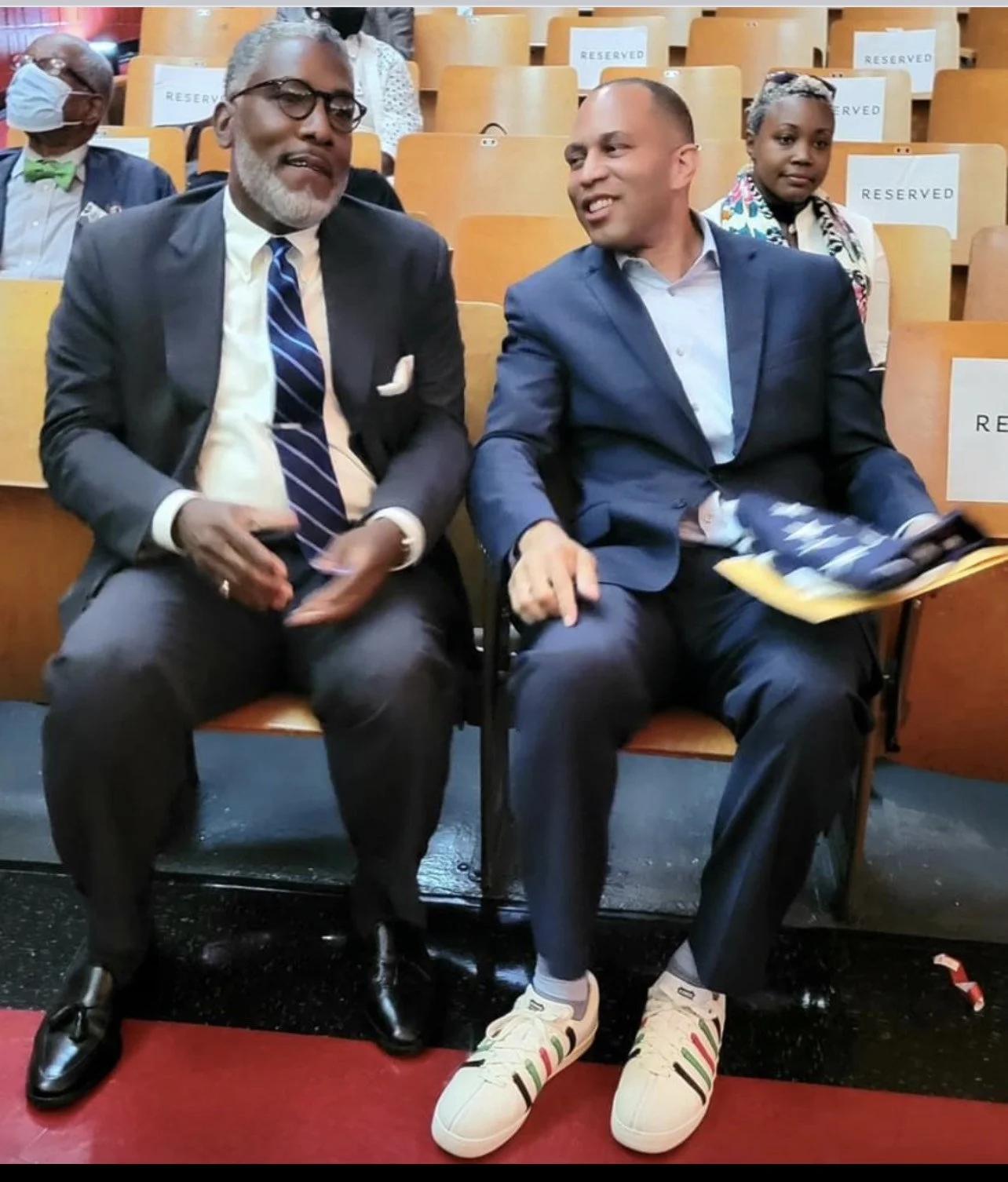
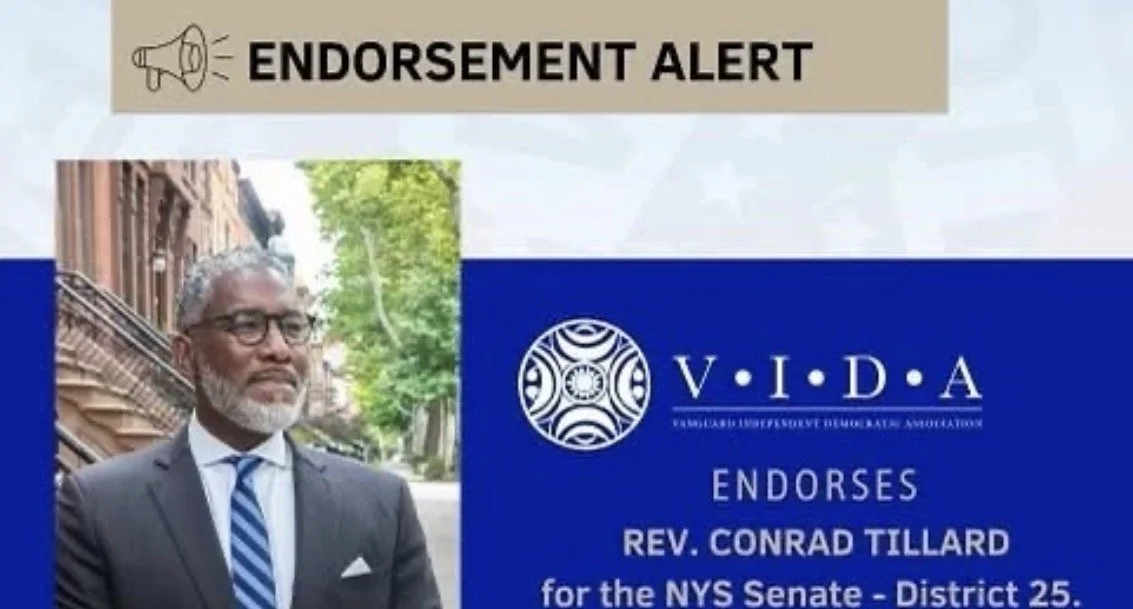
In 2013, he ran for the New York City Council in Brooklyn. In 2022, he challenged incumbent New York State Senator Jabari Brisport in the Democratic primary for the 25th Senate District. Tillard presented himself as a common-sense Democrat and directly challenged Brisport’s democratic-socialist philosophy.

Although he did not win those elections, the campaigns allowed him to raise broader questions about political representation, public safety, education, housing, homeownership, economic opportunity and the ideological direction of the Democratic Party.
Controversy, Accountability and Growth
Rev. Tillard’s public life has not been without controversy. (From The Hip-Hop Minister to The State Senator: I Have Grown But Kept My Integrity! - New York Amsterdam News). Entering public life as a teenager, he has established himself, as Rev. Al Sharpton referred to him, as a “long-distance runner.” He has evolved from a student activist, acolyte, and youth minister into a leader in his own right. Over the years, he has matured into the thoughtful leader he is today. While he has grown and evolved theologically and politically, he has maintained his integrity and consistency.

A truthful examination of his life and commitment is a fascinating journey (Leonard Greene: True progressives evolve, stop punishing Conrad Tillard).
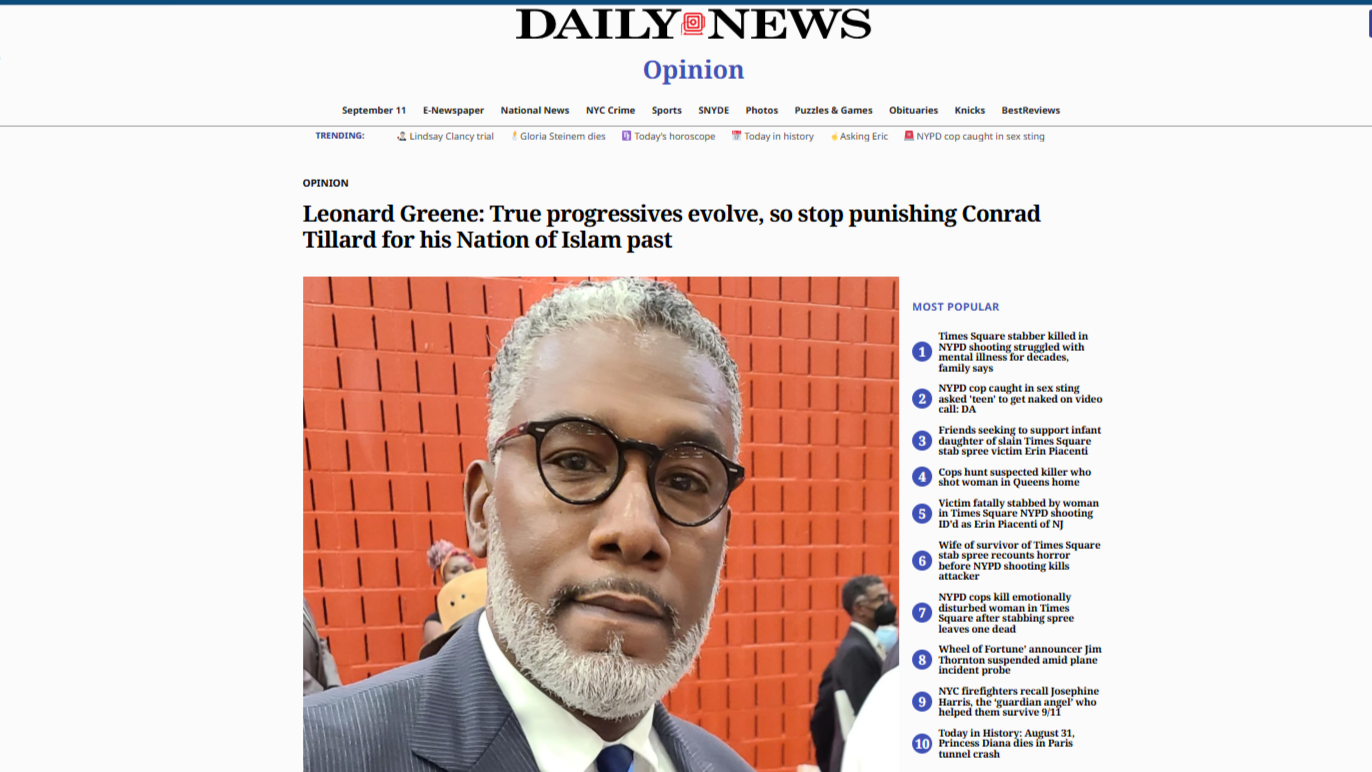
Rev. Tillard does not present his journey as one of uninterrupted certainty. It is the journey of a man who has held strong convictions, made mistakes, reconsidered earlier beliefs, changed religious direction, and continued wrestling publicly with questions of faith, race, politics, culture, and responsibility.
Media and Cultural Work
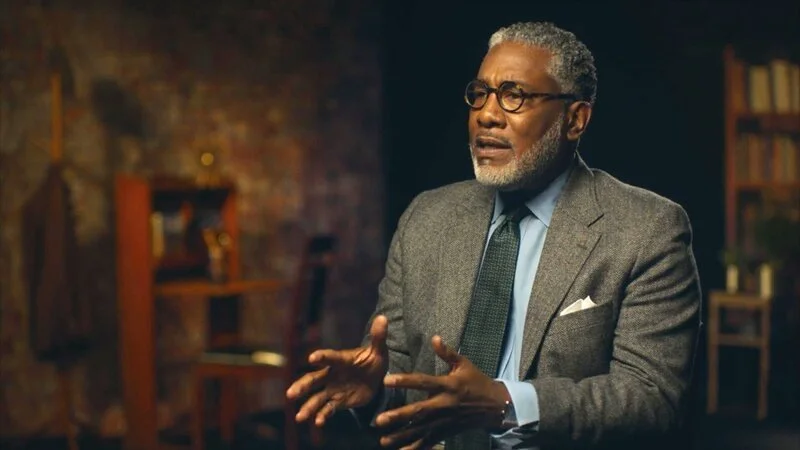
Rev. Tillard is the creator and host of Conversations with Conrad, which began as a radio program on WHCR 90.3 FM in Harlem and has developed into a national podcast.
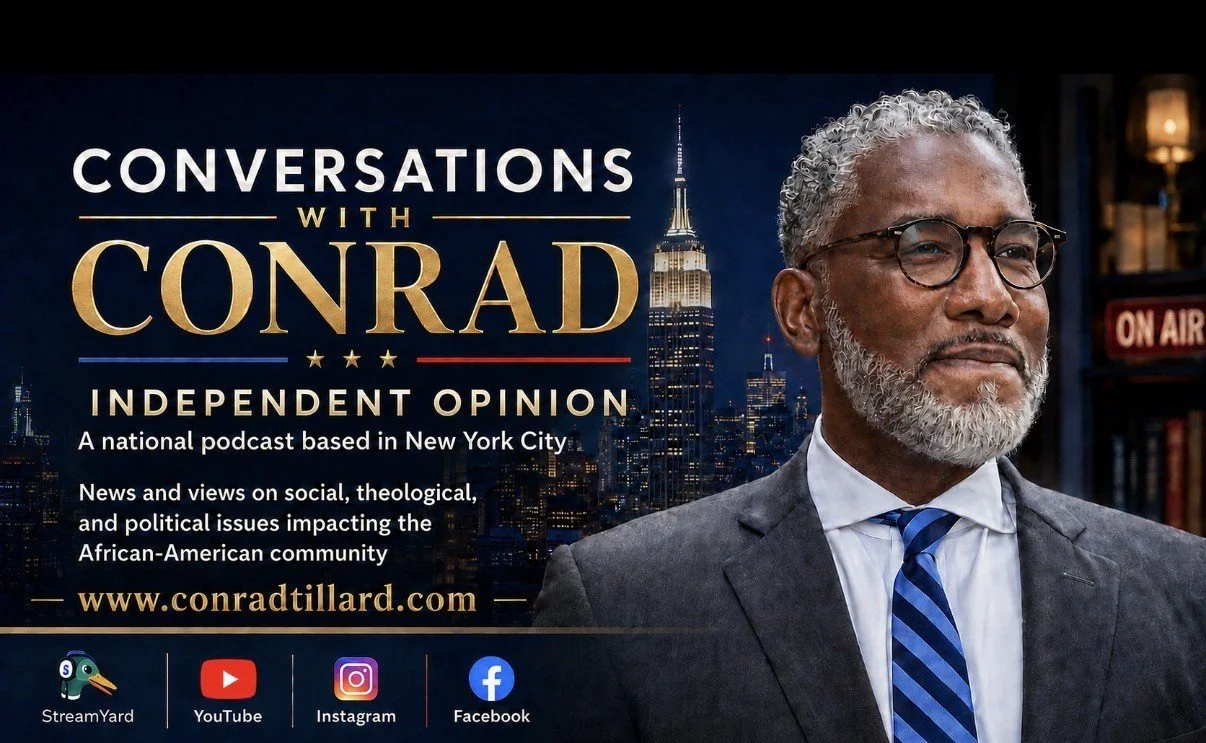
The program offers news, interviews and independent commentary on social, theological, cultural and political issues affecting African Americans. It reflects his conviction that the Black community needs thoughtful conversation that is historically grounded, spiritually serious and intellectually independent.
Tillard has also appeared in documentaries examining hip-hop, race, masculinity and New York history, including Hip-Hop: Beyond Beats and Rhymes, Digging for Weldon Irvine, Storm Over Brooklyn, Honorable Shyne and The Fall of Diddy.
Faith, Family and Institution-Building
Rev. Tillard is a father and longtime advocate for educational opportunity. He has served as a two-time PTA president and as a board member at an independent school. His children have attended public and independent schools and historically Black colleges and universities, including Fisk University, Howard University, and Morehouse College.
His family’s relationship with historically Black education reaches across generations. That experience has strengthened his commitment to protecting the institutions that have enabled Black Americans to learn, worship, own property, build businesses, and exercise leadership.
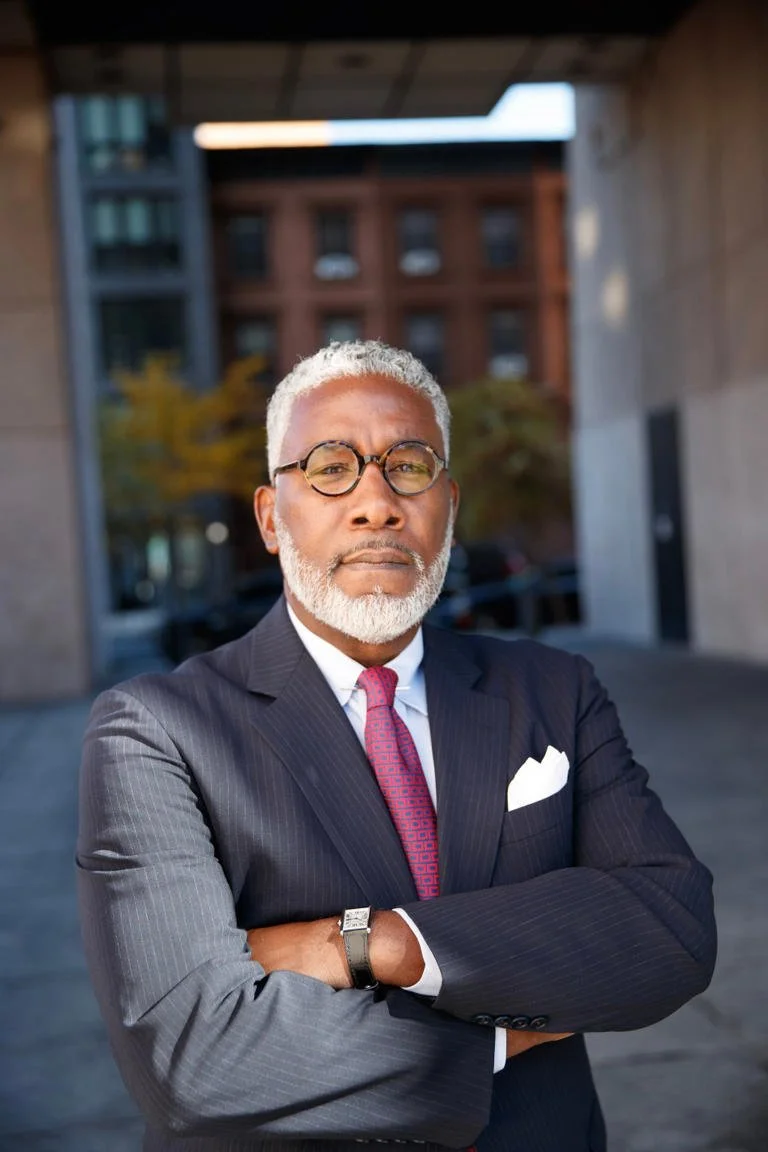
For Rev. Tillard, the future of Black America depends not solely upon political protest or government intervention. It also requires strong families, effective churches, excellent schools, responsible leadership, economic ownership and the recovery of a culture capable of transmitting discipline, faith and hope to the next generation.
A Life Still in Progress
The progression of Conrad Tillard’s life is unusual:
Student activist. Black nationalist. Nation of Islam minister. Hip-hop activist. Christian theologian. Congregational pastor. Professor. Political candidate. Independent commentator.
Each stage has informed the next.
His story poses a question larger than any individual biography: How does a person’s understanding of faith, race, power and freedom change after forty years of living inside the institutions and movements that have shaped Black America?
That question forms the foundation of his forthcoming memoir, In My Father’s House: The Spiritual and Political Memoir of the Man Once Known as the Hip-Hop Minister.
Rev. Tillard continues to preach, teach, write, organize, and host Conversations with Conrad, bringing the lessons of his journey into the urgent debates confronting the Black community and the nation.